 World Leading
Surface Technologies Research

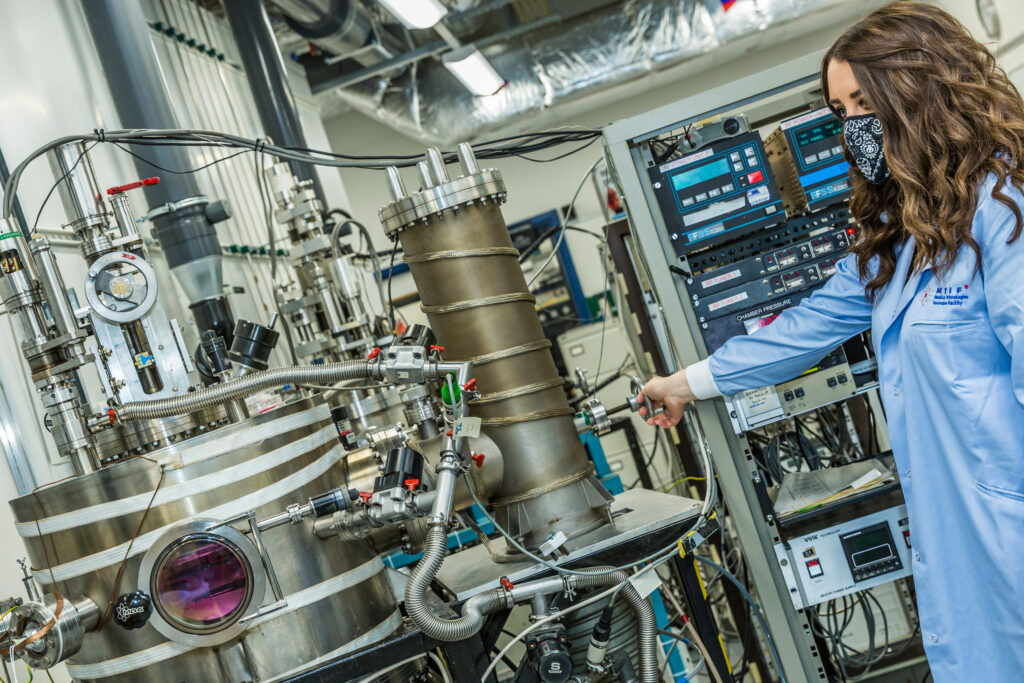
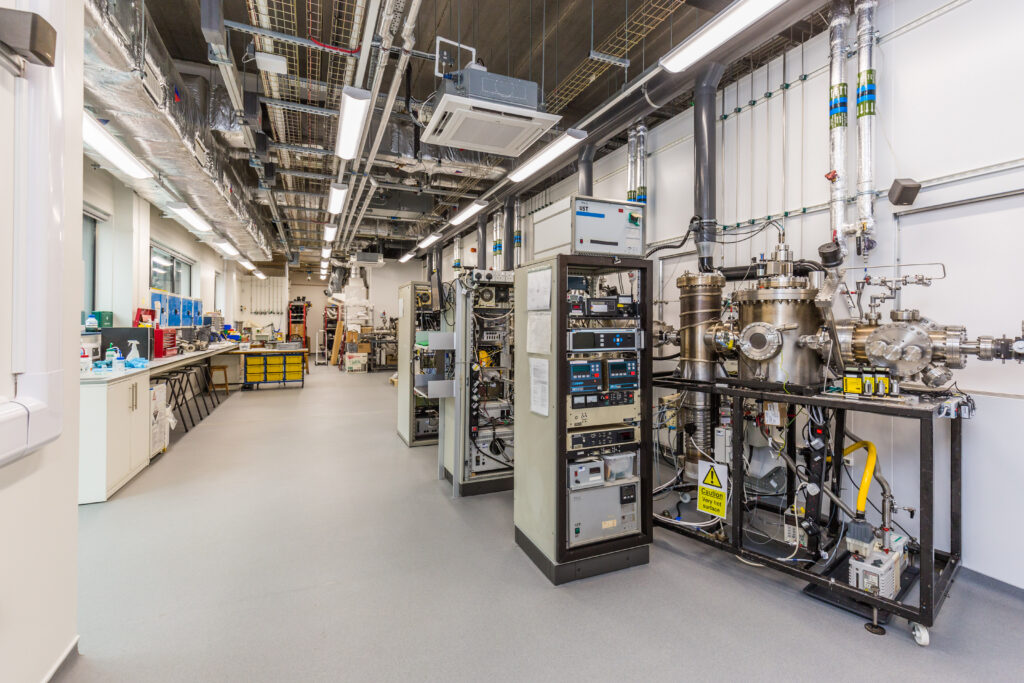
MTIF’s in house surface technologies laboratory brings world class expertise bespoke world leading equipment to industry.

Innovations in Surfaces, Materials and Related Technologies (iSMART)

Innovations in Surfaces, Materials and Related Technologies (iSMART)

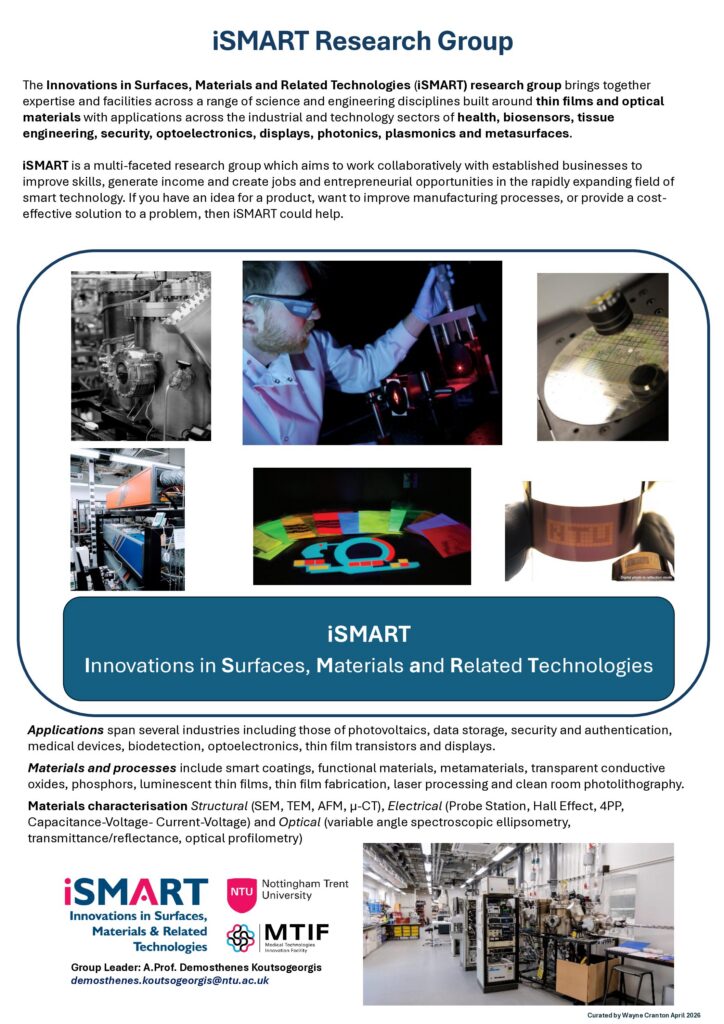
Led by Dr Demosthenes Koutsogeorgis, this pioneering research group bringing together expertise and facilities across a range of science and engineering disciplines built around thin films and optical materials. Previous work includes projects across the sectors of health, biosensors, tissue engineering, security, optoelectronics, semiconductors displays, photonics, plasmonics and metasurfaces.
Surface Technologies

Bespoke Services

iSMART’s applications are varied, capabilities include:

• Thin film fabrication techniques (RF and DC magnetron sputtering, sol-gel,thermal evaporation, e-beam evaporation, dry and wet thermal oxidation and ALD), laser processing.

• Cleanroom (GMP and ISO6) (spin coating, HMDS oven, maskless/mask photolithography, HF etch station).

• Materials’ characterisation capabilities include Structural (SEM, TEM, AFM, μ-CT, XRD), Electrical (Probe Station, Hall Effect, 4PP, Capacitance-VoltageCurrent-Voltage) and Optical (variable angle spectroscopic ellipsometry, transmittance/reflectance, optical profilometry).

iSMART Facility Overview

The Innovations in Surfaces, Materials and Related Technologies (iSMART) research group brings together expertise and facilities across a range of science and engineering disciplines built around thin films and optical materials with applications across the industrial and technology sectors of health, biosensors, tissue engineering, security, optoelectronics, displays, photonics, plasmonics and metasurfaces.
Thin Film Deposition: Magnetron Sputtering

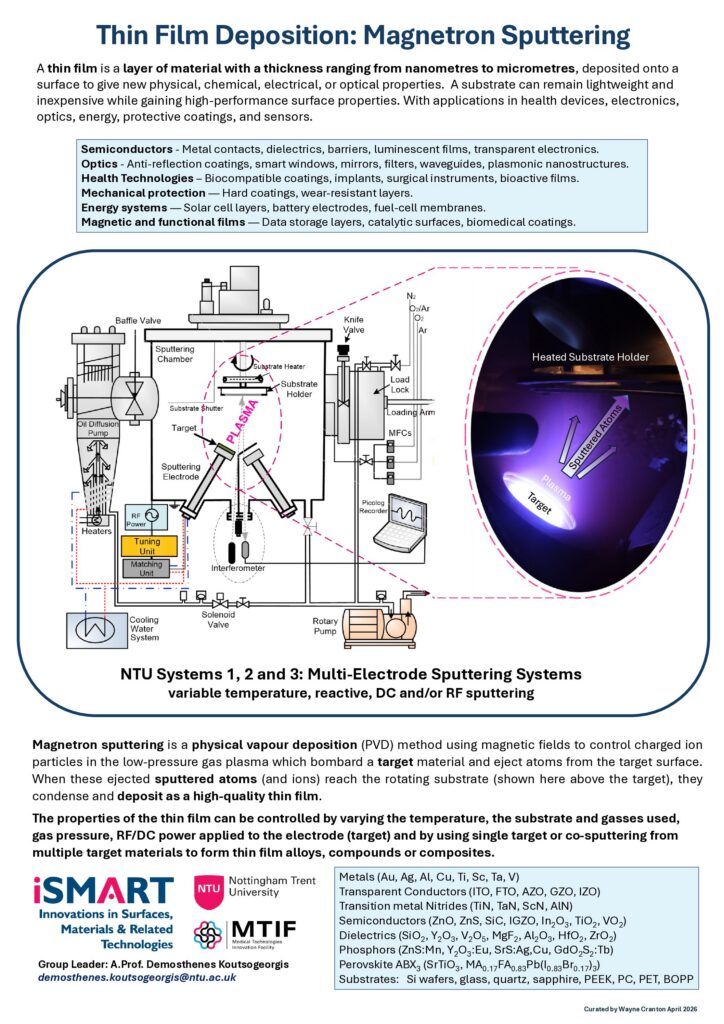
A thin film is a layer of material with a thickness ranging from nanometres to micrometres, deposited onto a surface to give new physical, chemical, electrical, or optical properties. A substrate can remain lightweight and inexpensive while gaining high-performance surface properties. With applications in health devices, electronics, optics, energy, protective coatings, and sensors.

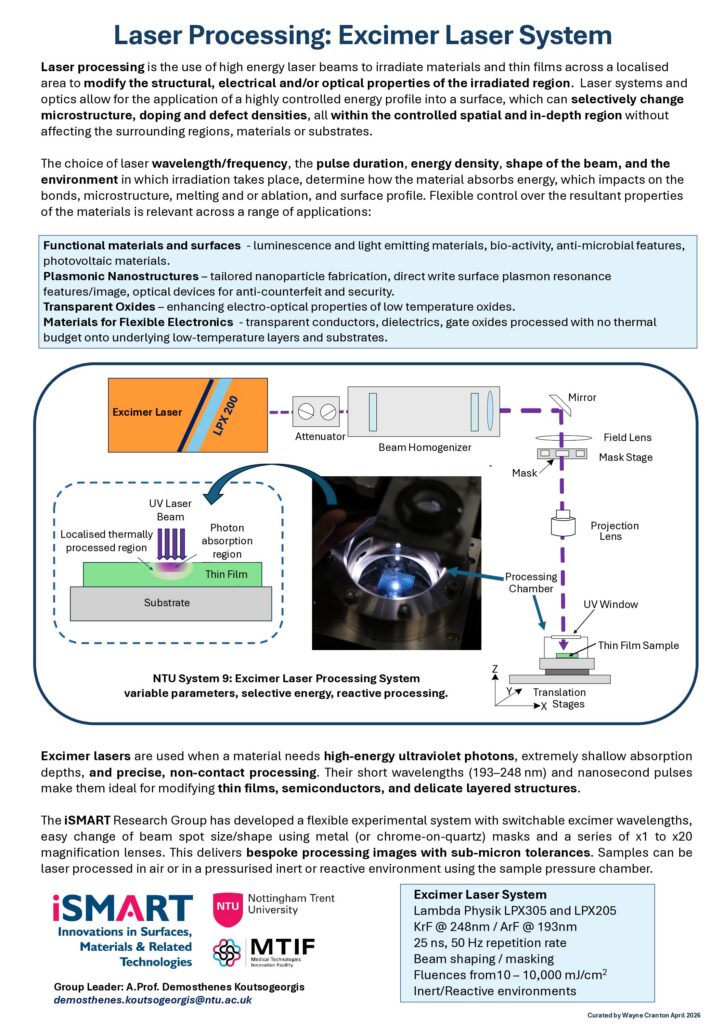
Excimer Laser System

Laser processing is the use of high energy laser beams to irradiate materials and thin films across a localised area to modify the structural, electrical and/or optical properties of the irradiated region. Laser systems and optics allow for the application of a highly controlled energy profile into a surface, which can selectively change microstructure, doping and defect densities, all within the controlled spatial and in-depth region without affecting the surrounding regions, materials or substrates.

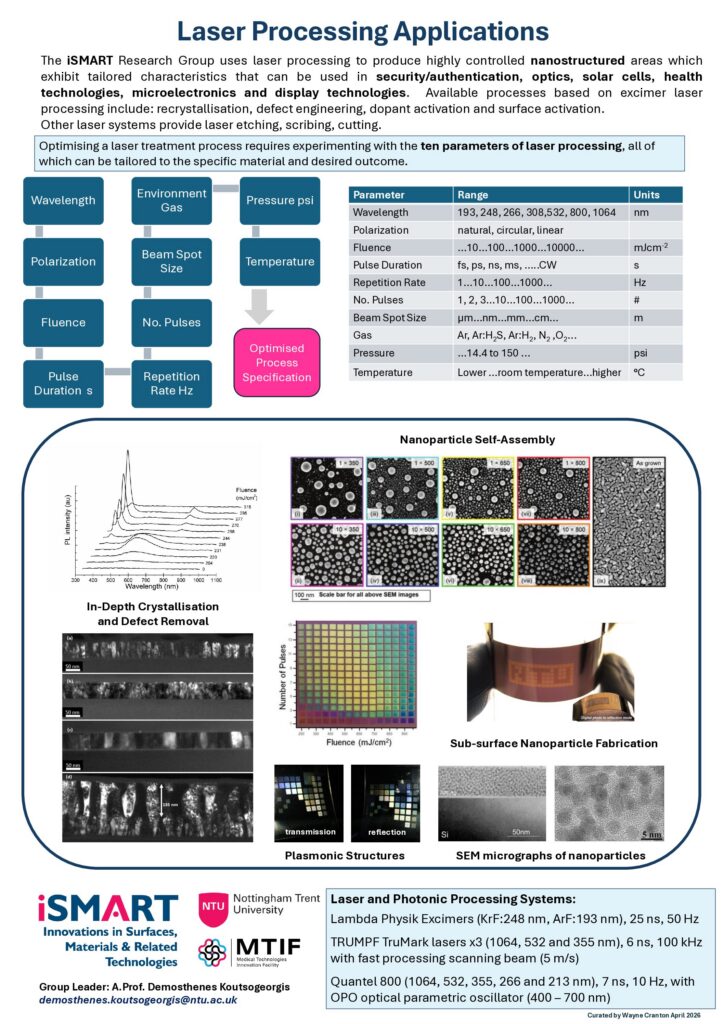
Laser Processing Applications

The iSMART Research Group uses laser processing to produce highly controlled nanostructured areas which exhibit tailored characteristics that can be used in security/authentication, optics, solar cells, health technologies, microelectronics and display technologies. Available processes based on excimer laser processing include: recrystallisation, defect engineering, dopant activation and surface activation.
Other laser systems provide laser etching, scribing, cutting.

Let’s talk

Tell us about a project or idea you are working on and we’ll let you know how we can make a difference.